Warner and Kaine Propose Bill to Ensure Refunds for Trump Era Illegal Tariffs

Published:February 24 2026
Warner & Kaine Introduce Legislation to Require Refunds of Trump’s Illegal Tariffs

WASHINGTON, D.C. – U.S. Senators Mark R. Warner and Tim Kaine (both D-VA) introduced legislation to require full refunds of Trump’s illegal tariffs, after they were struck down by the U.S. Supreme Court on Friday by a 6-3 vote. To date, the Trump administration has collected an estimated $175 billion in illegal tariff revenue, raising taxes on products from nearly every country on earth, and jacking up prices for American families. The Tariff Refund Act of 2026 would require the full refund, with interest, of those funds.
“Trump’s reckless tariffs have driven up costs for families, consumers, and small businesses, and the money that Americans have lost as a result of these illegal taxes needs to be returned to them. I’m proud to introduce this legislation that will prioritize providing relief to local businesses and working families,” said Warner. “As prices rise to new heights under the Trump administration, I will continue fighting to make the cost of living affordable for Virginians.”
“I am glad the Supreme Court ruled against President Trump’s ridiculous abuse of emergency power to impose broad-based, cost-raising taxes on American consumers and businesses,” said Kaine. “These tariffs were a mistake from the start, which is why I led the charge to challenge them in the Senate. Now, I’m glad to team up with my colleagues to press the Administration to fully refund Americans for the costs President Trump forced on them.”
The Tariff Refund Act of 2026 would ensure that U.S. Customs and Border Protection (CBP) completes the payment of refunds quickly and prioritizes the interests of small businesses in that process. Importantly, the bill would ensure that importers are not required to take costly administrative steps to receive a refund of the tariffs unlawfully collected by the Administration. The bill would also direct CBP to coordinate with the Small Business Administration (SBA) to provide information and technical support. Finally, the bill’s reporting requirements would provide Congress, which has constitutional authority over trade and tariffs, with proper oversight over the refund payment process.
The Trump administration previously recognized that it must refund, with interest, any duties determined to have been unlawfully collected. However, it is unclear what timeline, process, or other guidelines the administration would follow to provide refunds—and the lack of a clear, accessible process would necessarily advantage large importers with resources to dedicate to outside counsel and consultants.
In addition to Warner and Kaine, this bill was led by U.S. Senators Ron Wyden (D-OR), Edward Markey (D-MA), Jeanne Shaheen (D-NH), Chuck Schumer (D-NY), Ben Ray Luján (D-NM), Mazie Hirono (D-HI), Chris Coons (D-DE), John Hickenlooper (D-CO), Angus King (I-ME), Angela Alsobrooks (D-MD), Andy Kim (D-NJ), Maria Cantwell (D-WA), Jacky Rosen (D-NV), Dick Durbin (D-IL), Alex Padilla (D-CA), Adam Schiff (D-CA), Richard Blumenthal (D-CT), Patty Murray (D-WA), Chris Van Hollen (D-MD), and Michael Bennet (D-CO).
--
The U.S. Supreme Court recently struck down tariffs imposed during the Trump administration, ruling them illegal in a 6-3 decision. These tariffs had raised costs on a wide range of imported goods, affecting nearly every country and increasing prices for American families and businesses. In response, Senators Mark R. Warner and Tim Kaine of Virginia have introduced the Tariff Refund Act of 2026. This legislation aims to require full refunds, with interest, of the estimated $175 billion collected under these unlawful tariffs.
This post explores the background of these tariffs, the impact on consumers and businesses, and how the new legislation seeks to provide relief.
Background of Trump’s Tariffs and Supreme Court Ruling
During the Trump administration, tariffs were imposed on imports from many countries, justified as a means to protect American industries and promote domestic manufacturing. However, the Supreme Court found that the administration overstepped its authority by using emergency powers to impose broad tariffs without proper legal basis.
The tariffs affected a wide range of products, from steel and aluminum to consumer electronics and clothing. The court’s decision declared these tariffs illegal, meaning the government collected revenue unlawfully.
The estimated $175 billion collected in tariff revenue represents a significant financial burden on American consumers and businesses, who faced higher prices as a result.
Impact on American Families and Small Businesses

The tariffs increased costs for everyday products, which translated into higher prices at the store and increased expenses for small businesses relying on imported goods. This had several consequences:
Higher consumer prices: Families paid more for goods ranging from household appliances to clothing.
Increased costs for small businesses: Many small businesses operate on thin margins and rely on imports for inventory. The tariffs raised their costs, forcing some to raise prices or reduce staff.
Economic ripple effects: Higher costs reduced consumer spending power, slowing economic growth in affected sectors.
Senator Warner emphasized the need to return the money to those who bore the burden, stating that the legislation prioritizes relief for local businesses and working families.
Key Provisions of the Tariff Refund Act of 2026
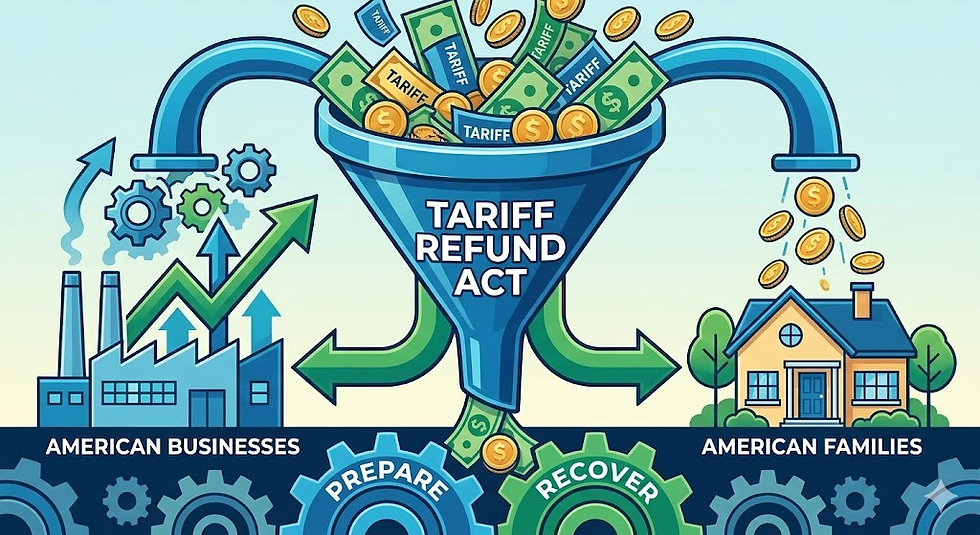
The new legislation introduced by Senators Warner and Kaine focuses on ensuring that Americans receive refunds for the illegal tariffs without unnecessary hurdles. Key points include:
Full refund with interest: The bill requires the government to return all tariff revenue collected unlawfully, plus interest to compensate for the time value of money.
Streamlined refund process: Importers will not have to navigate costly or complex administrative procedures to claim refunds.
Priority for small businesses: The bill directs U.S. Customs and Border Protection (CBP) to prioritize small businesses in processing refunds, recognizing their vulnerability to tariff costs.
Coordination and efficiency: CBP must coordinate efforts to ensure refunds are processed quickly and fairly.
This approach aims to reduce the financial strain on businesses and consumers and restore fairness in trade policy.
Why Refunds Matter for the Economy

Refunding the tariff revenue is more than just returning money; it has broader economic implications:
Restoring consumer purchasing power: Refunds can help families recover some of the extra costs they paid, allowing them to spend on other goods and services.
Supporting small businesses: Many small businesses operate with tight budgets. Refunds can help them stabilize operations, retain employees, and invest in growth.
Correcting government overreach: The legislation sends a message that executive actions must respect legal limits, protecting the economy from arbitrary tax increases.
Encouraging fair trade practices: By addressing illegal tariffs, the U.S. can rebuild trust with trading partners and promote more balanced trade policies.
Senator Kaine highlighted that these tariffs were a mistake from the start and that refunding Americans is a necessary step to right that wrong.
What Comes Next for the Tariff Refund Act
The bill now moves through the legislative process, where it will be debated and potentially amended before a vote. If passed, the government will begin the process of refunding the tariff revenue.
For importers and businesses, this means:
Monitoring updates from CBP on refund procedures.
Preparing documentation to claim refunds without unnecessary delays.
Engaging with trade associations and legal advisors to understand their rights.
Consumers may not receive direct refunds but will benefit indirectly as businesses pass savings back through lower prices or improved services.
Practical Steps for Businesses and Consumers

While the legislation is pending, businesses and consumers can take steps to prepare:
Businesses should review their import records to identify tariffs paid during the affected period.
Stay informed about CBP announcements regarding refund claims.
Consult legal or trade experts to ensure proper documentation and timely claims.
Consumers can support local businesses affected by tariffs by choosing to shop locally and advocating for fair trade policies.
These actions can help maximize the benefits once refunds begin.

The introduction of the Tariff Refund Act of 2026 marks a significant effort to correct the financial harm caused by illegal tariffs. Returning billions of dollars to American families and businesses will ease the burden of higher prices and support economic recovery.
Comments