Scott County Hearing A Must Attend For Transparency And Accountability On Data Centers

Updated: Aug 29
Scott County residents deserve clear answers before decisions are made that could affect our natural resources and quality of life for decades.
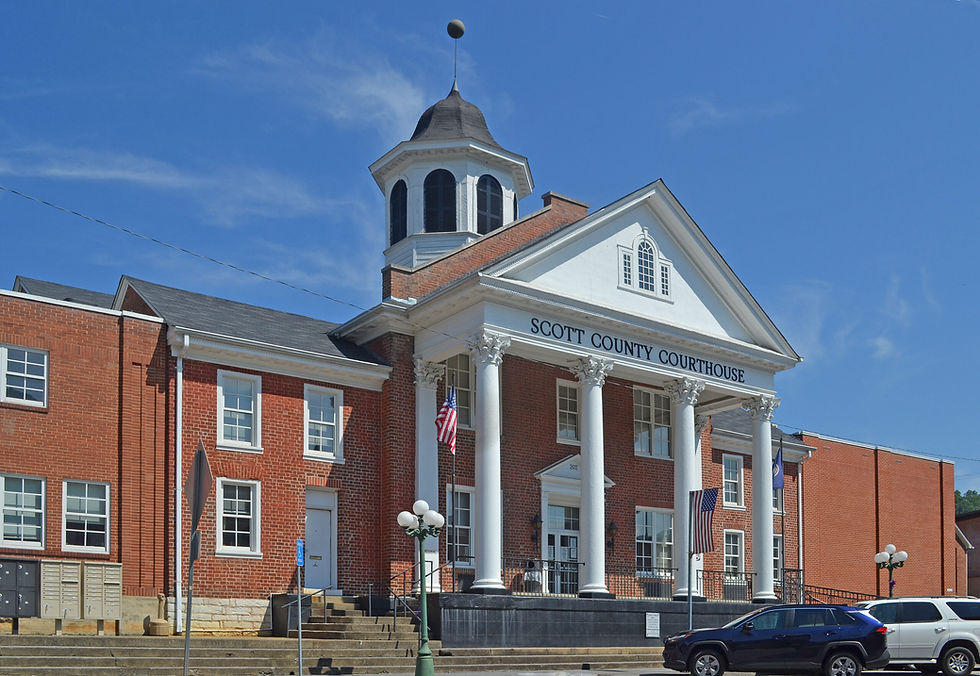
That is why the upcoming Scott County public hearing, announced by the county and available here through the Scott County notice, should be treated as a must-attend event. Text of the notice is as follows:
NOTICE OF PUBLIC HEARING
Notice is given that on Monday, September 14, 2026, at 6:00 p.m., or as soon thereafter as may be heard, in the Board of Supervisors Meeting Room, Community Services Building 2nd Floor, 190 Beech Street, Suite 201, Gate City, Virginia 24251,the Scott County Planning Commission will hold a public hearing on the possible adoption of an Ordinance to Amend the Scott County Zoning Ordinance to review the Official Zoning Map, to amend Article III Use and Design Standards, Section 300-100.13 Miscellaneous Uses, Solar Generation Facility, Utility-Scale, and to add Data Center as a Miscellaneous Use in Commercial and Industrial Districts with regulations in Article III Use and Design Standards, Section 300-100.13 Miscellaneous Uses. A copy of the proposed Ordinance is on file for public inspection at the County Administrator’s Office, County Office Building, 190 Beech Street, Suite 201, Gate City, VA 24251.
By: Joshua M. Wilson, Clerk. Scott County Board of Supervisors.
This hearing comes at a time when Southwest Virginia is hearing more and more about large-scale development tied to data centers and energy production. Scott County Democrats are not asking people to take a position today for or against data centers, nuclear power, or any specific project. We are asking for something more basic and more urgent: transparency, accountability, and meaningful public involvement before major decisions are made.
Local residents should not be the last to know
Major development proposals often arrive with promises. They can bring talk of jobs, investment, tax revenue, and future growth. Those claims deserve to be heard.
But residents also deserve to hear the full picture.
A data center can raise serious questions about electricity demand, water use, noise, land use, tax incentives, infrastructure costs, and who pays when roads, transmission lines, utilities, or emergency services need upgrades.
These are not small matters. They are the kind of decisions that shape counties for generations. That is why public hearings cannot be treated as a box to check after important conversations have already happened somewhere else. They must be real opportunities for residents to learn, question, object, support, and demand details.
The demand for transparency is not just a headline. It is a reminder that democracy works only when people show up and government listens.
We can ask hard questions without taking a final position
Some residents may support data centers. Some may oppose them. Some may be open to nuclear energy. Others may be deeply concerned. Many people may simply want more information before forming an opinion.
That is healthy. Those differences should not divide us from the shared principle that public decisions require public scrutiny.
Scott County Democrats believe local government should answer clear questions before moving forward on projects of this scale:
What exactly is being proposed?
Who stands to benefit financially?
What land, water, roads, and utility systems would be affected?
What incentives, tax arrangements, or public commitments are being discussed?
What risks have been identified?
What outside companies, agencies, or political offices are involved?
What studies have been completed, and will they be made public?
How will residents be notified before future votes or agreements?
These are not partisan questions. They are common-sense questions.

Wise County nuclear news adds urgency for Scott County
Congressman Morgan Griffith’s recent announcement about nuclear facilities in Wise County should sharpen the focus in Scott County. Even when a project is located in a neighboring county, the impact may not stop at the county line.
Energy infrastructure, transmission corridors, workforce needs, emergency planning, transportation routes, and environmental concerns can reach across the region. Southwest Virginia counties share roads, watersheds, economies, and public services. A major energy announcement in Wise County naturally raises questions for Scott County and surrounding communities.
That does not mean every project is bad. It does mean residents should expect openness from the beginning.
If Southwest Virginia is being considered for major energy and technology development, then local people should not have to piece the story together from scattered announcements, rumors, and after-the-fact votes. County leaders should provide timely information, plain-language explanations, and open forums where residents can be heard.
No one should have to wonder what has already been promised behind closed doors.
Transparency protects everyone
Transparency is not anti-growth. Accountability is not anti-business. Public oversight does not mean saying no to every idea.
In fact, transparency protects good projects from mistrust. When a proposal is sound, the public process should make that clear. When a proposal carries serious costs or risks, people deserve to know before commitments are made.
For local government, accountability means more than posting a notice and holding a hearing. It means making documents accessible, explaining technical issues in plain language, answering direct questions, and giving residents time to understand what is at stake.
For residents, accountability means showing up.
That may include attending the hearing, reading the county notice, asking county officials for documents, speaking during public comment, talking with neighbors, and following what happens after the meeting ends.

Scott County residents should attend the upcoming public hearing announced by the county. See the notice here: Scott County public hearing notice.
Scott County Democrats are not taking a position today for or against data centers or nuclear power. We are taking a firm position in favor of transparency, accountability, and public involvement.
Projects that could affect our land, water, utilities, roads, emergency planning, tax base, and quality of life must be discussed openly. Residents should not be the last to know.
Please attend the hearing, ask questions, listen carefully, and encourage your neighbors to do the same.
The bottom line is simple
Scott County’s future should not be shaped quietly. It should be shaped in public, with facts on the table and residents in the room.
The hearing is a chance to insist on open government before decisions are final. Whether the topic is data centers, nuclear power generation, or any other major development, the standard should be the same: tell the public what is being considered, explain the costs and risks, and answer the questions before moving forward.

Scott County Democrats urge residents to attend, stay informed, and hold local government to the level of transparency and accountability this moment requires.
Original notice available here: https://www.scottcountyva.gov/m/newsflash/Home/Detail/171
Comments